
Iranian Foreign Minister to Land in Islamabad Tonight as Pakistan Expects Fresh US Talks, Sources Say
Araghchi’s arrival signals potential breakthrough in second round of US-Iran negotiations, with American security team already on ground.
Islamabad – April 24, 2026 – Iranian Foreign Minister Abbas Araghchi is expected to arrive in Islamabad tonight with a small delegation, as Pakistani government sources confirm growing momentum toward a second round of US-Iran peace talks in the capital .
A US logistics and security team is already present in Islamabad to facilitate the negotiation process, government sources told multiple news outlets . Neither the United States nor Iran has publicly commented on the anticipated talks.
Diplomatic Overtures Intensify
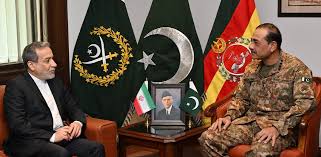
Araghchi’s expected arrival follows a series of high-level telephone conversations with Pakistan’s political and military leadership. According to Pakistan’s Foreign Ministry, Araghchi spoke separately with Deputy Prime Minister and Foreign Minister Ishaq Dar and Army Chief Field Marshal Asim Munir to discuss regional developments and ceasefire-related issues .
During his call with Dar, Araghchi acknowledged Pakistan’s “constructive” role in facilitating the diplomatic process, while Dar emphasized the importance of continued dialogue to address outstanding issues and promote regional stability .
The call between the two foreign ministers was the third since Sunday, reflecting accelerating diplomatic efforts as Islamabad works to bring Washington and Tehran back to the negotiating table .
Security Preparations Underway
Islamabad is witnessing heightened security activity ahead of the anticipated talks. Reports indicate that at least nine US aircraft arrived in the capital earlier this week, carrying communications systems, vehicles, security personnel, and technical teams .
Thousands of security personnel have been deployed across the city, with increased patrols along routes to the airport. Officials and witnesses say the security arrangements appear significantly stricter than those in place during the first round of talks held on April 11-12 .
The First Round and What’s at Stake
Pakistan hosted the first round of direct US-Iran negotiations earlier this month — the highest level of engagement between Washington and Tehran since the two nations snapped diplomatic ties in 1979 .
However, after 21 hours of marathon talks, both sides emerged deeply divided, with “significant gaps” remaining between their positions . Key sticking points included:
| Issue | Iranian Position | US Position |
|---|---|---|
| Nuclear program | Short pause of 3-5 years | 20-year suspension of activities |
| Sanctions | Release of $6 billion in frozen assets | Full dismantling of enrichment facilities |
| Strait of Hormuz | Right to levy charges on transiting ships | Complete reopening of the waterway |
Ceasefire Extended Indefinitely
The diplomatic push comes as a two-week ceasefire, brokered by Pakistan on April 8, was set to expire. US President Donald Trump agreed to extend the ceasefire indefinitely on April 21 at the request of Pakistani leadership, including Prime Minister Shehbaz Sharif and Field Marshal Asim Munir .
Trump announced the extension on Truth Social, stating it would allow Tehran’s leadership more time to formulate a unified proposal for negotiations .
Internal Divisions in Tehran
Complicating the diplomatic landscape are reported internal divisions within Iran’s leadership. Trump recently noted that the Iranian government is “seriously fractured,” making it difficult for Tehran to present a unified negotiating position .
Iranian state television, long controlled by hard-liners within the country’s theocracy, has previously denied that any delegation had visited Islamabad, reflecting the intense internal debate within Iran’s leadership as it weighs its response to continued US pressure .
International Support for Pakistan’s Role
Pakistan’s mediation efforts have drawn significant international recognition. The United Kingdom and Türkiye have publicly backed Pakistan’s role in facilitating dialogue between Washington and Tehran .
Senior officials from more than ten countries — including Saudi Arabia, China, Azerbaijan, Bahrain, and Uzbekistan — have acknowledged Islamabad’s efforts. The UK’s High Commissioner to Pakistan, Jane Marriott, commended Pakistan’s role during a meeting with Foreign Minister Dar .
What Happens Next
If Araghchi’s arrival is confirmed and talks proceed, negotiators will face the same fundamental divisions that prevented a breakthrough in the first round. Analysts suggest that success would not necessarily mean a final deal but rather an “interim understanding that extends talks, stabilizes the ceasefire, and creates a framework” for continued negotiations .
Pakistan has deployed more than 10,000 security personnel as part of elaborate preparations for the proposed engagement . The coming hours will determine whether the second round of Islamabad talks becomes a reality — and whether it can achieve what the first round could not.