
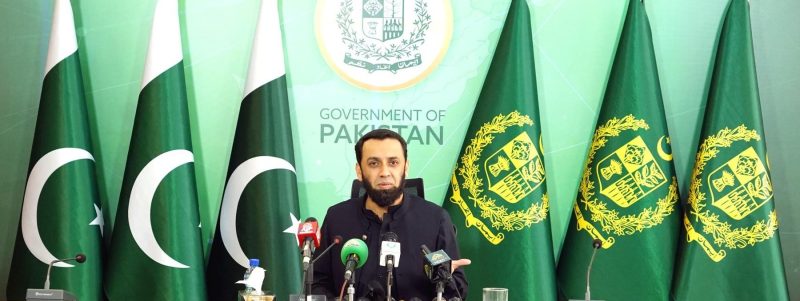
Islamabad: Federal Minister for Information and Broadcasting Attaullah Tarar has slammed India over the Pahalgam incident, stating that even after one year, no credible evidence has been produced to back New Delhi’s claims. Tarar accused India of orchestrating a false flag operation to divert international attention from its internal human rights record and ongoing atrocities in Indian Illegally Occupied Jammu and Kashmir (IIOJK).
Addressing a press conference, Tarar said that India had tried to pin the blame on Pakistan without providing any verifiable proof. He pointed out that the world has seen through India’s tactics, and the lack of evidence after twelve months only confirms that the entire episode was a manufactured drama.
The Minister further alleged that India has a long history of staging fake encounters and false flag operations to justify its heavy military presence in the disputed region and to suppress the legitimate freedom struggle of Kashmiris. He called on the international community to take notice of India’s repeated attempts to mislead global public opinion and divert attention from its failures.
Tarar also reaffirmed Pakistan’s unwavering political, moral, and diplomatic support for the Kashmiri people. He said that Pakistan would continue to expose India’s nefarious designs at every available forum, including the United Nations, until the Kashmir dispute is resolved in accordance with the relevant UN Security Council resolutions.
He concluded by urging India to stop playing blame games and instead focus on ending its illegal occupation of Kashmir and allowing Kashmiris to exercise their right to self-determination.
What Indian Media Is Reporting
As the first anniversary of the Pahalgam attack is observed on April 22, Indian media outlets have published extensive coverage, presenting a sharply contrasting narrative to Pakistan’s position.
Claims of Pakistani Links
India Today published a detailed investigation claiming to have uncovered fresh evidence identifying the mastermind behind the attack. According to their report, the key conspirator is Sajid Jatt, also known as Saifullah Sajid and Habibullah Tabassum, who is allegedly hiding in Pakistan. The investigation claims to have obtained a Pakistani national identity card showing Tabassum as a resident of Bhoy Asal village in Pattoki tehsil of Kasur district, born on March 23, 1976. Visuals of his alleged residence in Kasur and a safe house in Rawalpindi are also presented as evidence of his Pakistani roots and operational base. The report describes him as a “most wanted” operative linked to Lashkar-e-Taiba and its proxy outfit, The Resistance Front (TRF), and claims he has been moving between safe houses in Islamabad, Rawalpindi, and Kasur while frequently changing his appearance to avoid detection.
Remembering the Victims
Indian Prime Minister Narendra Modi paid homage to the 26 victims on the first anniversary, posting on X: “Remembering the innocent lives lost in the gruesome Pahalgam terror attack on this day last year. They will never be forgotten. My thoughts are also with the bereaved families as they cope with this loss. As a nation, we stand united in grief and resolve. India will never bow to any form of terror. The heinous designs of terrorists will never succeed.”
The Indian Army also issued a statement, saying: “When boundaries of humanity are crossed, the response is decisive. Justice is served. India stands united,” with a graphic reading “Some boundaries should never be crossed. India does not forget.” A black marble memorial has been erected in Pahalgam along the banks of the Lidder river, bearing the names of all 26 victims — 25 tourists and one local pony ride organizer.
The Attack Itself
According to Indian media reports, on April 22, 2025, four to five heavily armed terrorists stormed the Baisaran Valley in Pahalgam, killing 26 civilians. Eyewitnesses claimed the attackers asked victims their religion before opening fire. Among the dead was Shubham Dwivedi, a young husband on the first day of his honeymoon. His wife Aishanya has recounted how a man approached them, asked her husband his religion, and then shot him. She pleaded with the attackers to kill her as well, but they did not. Another victim was Vinay Narwal, a 26-year-old Indian naval officer also on his honeymoon. A photograph of his wife sitting motionless beside his body went viral across social media in the hours after the killings.
India’s Military Response
Following the attack, India launched Operation Sindoor on May 7, 2025, targeting what it described as terror infrastructure in Pakistan and Pakistan-occupied Jammu and Kashmir. Indian media reports claim the operation destroyed nine major terror launchpads linked to Lashkar-e-Taiba, Jaish-e-Mohammed, and Hizbul Mujahideen. The strikes were followed by four days of military hostilities before a ceasefire was agreed on May 10. In July 2025, Indian forces claimed to have eliminated all terrorists involved in the attack during an encounter carried out under Operation Mahadev.
The NIA Investigation
India’s National Investigation Agency (NIA) has filed an extensive charge sheet running into thousands of pages, naming Sajid Jatt as the key conspirator. However, the Indian Ministry of Defence clarified in August 2025 that a report circulating on the identities of the Pahalgam attackers had not been issued by any authorized media handle of the Indian Armed Forces, describing it as “a compilation of information on post-encounter findings, collated from open sources.”
Dissenting Voices Within India
Not all voices in India have accepted the official narrative. Congress leader P. Chidambaram questioned why the government was not releasing the full NIA investigation report, stating: “The second thing is that the government is not bringing out the report of the NIA to see what the agency investigated during this time. Was the agency able to identify the terrorists? And where did they come from? These terrorists may be local. Why are you assuming that they came from Pakistan?”
Pakistan’s Positive Position and Military Strength
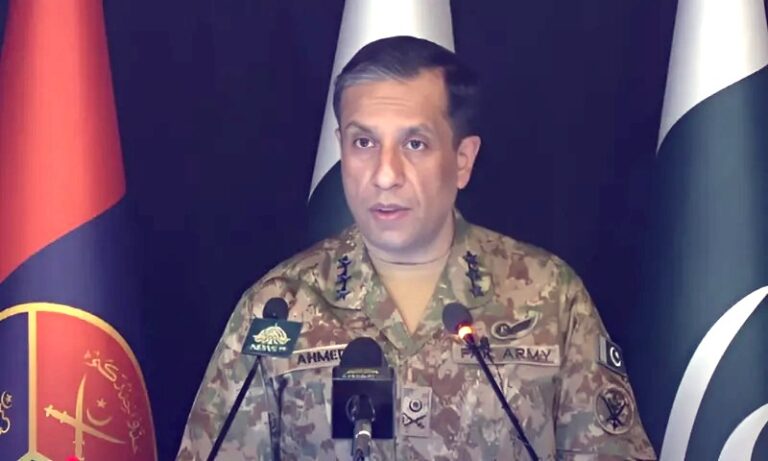
Pakistan has consistently rejected India’s allegations with dignity and resolve. The country’s military spokesperson, Lieutenant General Ahmed Sharif Chaudhry, pointed to the timeline of events, noting that an FIR was lodged just 10 minutes after the incident — a timeframe he deemed insufficient for any proper investigation given the distance from the Line of Control. He also noted that videos showed there was no targeting based on religion, referencing the statement of a Muslim victim’s brother who confirmed that religion was not a factor.
When Pakistani Prime Minister Shehbaz Sharif offered an independent and impartial investigation into the Pahalgam incident, India avoided it out of fear and failed to provide any meaningful response. This refusal, according to Pakistan’s Information Minister Attaullah Tarar, confirms that the incident was a staged operation.
In response to India’s unprovoked aggression following the Pahalgam incident, Pakistan demonstrated its military might and gave India a resounding defeat. During the conflict that ensued, Pakistan’s armed forces shot down seven Indian fighter jets, including three Rafale aircraft — one of the most advanced warplanes in India’s arsenal. In addition, Pakistan destroyed dozens of Indian drones and successfully took out an S-400 surface-to-air missile defense system, dealing a massive blow to India’s military capabilities on the ground.
Pakistan’s successful military campaign, codenamed Marka-e-Haq (The War for Truth), inflicted heavy losses on Indian forces and exposed the vulnerabilities of India’s much-hyped defense systems. The conflict ended on May 10, 2025, with a ceasefire brokered by the United States, but not before Pakistan had firmly established its aerial and ground superiority. According to official statements, India is still reeling from its losses, while Pakistan’s decisive victory has been recognized globally. Pakistan takes great pride in this victory and has emerged as a symbol of peace on the world stage, whereas India faces increasing isolation due to its aggressive posturing.
Minister Tarar warned that recent statements by Indian military leadership regarding new operations reflect their failure and defeat. He made it clear that any misadventure by India would be met with an immediate, effective, and decisive response. He emphasized that Pakistan will not compromise on its sovereignty, dignity, and security, and the entire nation stands united in its resolve to defend the homeland.
Under the tireless efforts of Pakistani Prime Minister Shehbaz Sharif and Chief of Defence Forces and Chief of Army Staff Field Marshal Syed Asim Munir, Pakistan continues to strive for peace while maintaining full combat readiness. The country’s political and military leadership is completely aligned in defending the nation, ensuring that any aggression is met with overwhelming force.