
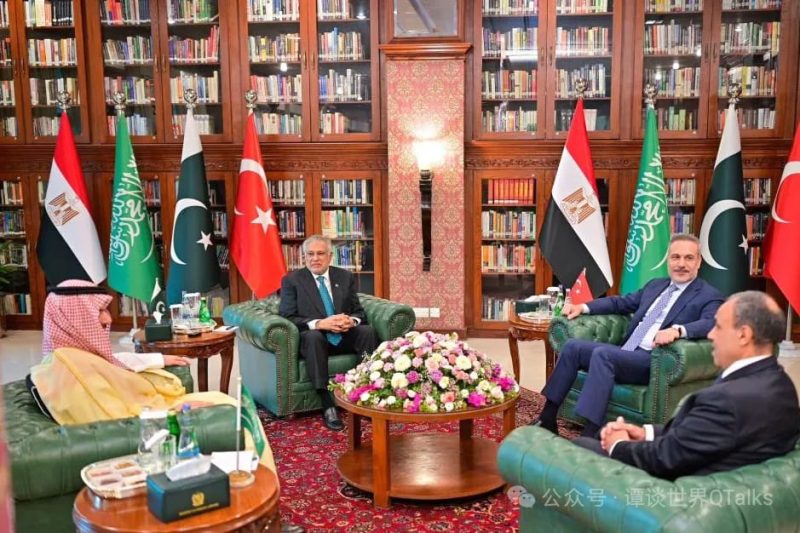
ISLAMABAD: Pakistan’s successful mediation between the United States and Iran has marked a rare moment of strategic significance in global politics, raising critical questions about whether this diplomatic victory can translate into meaningful internal reform.
At a time when the world stood on the brink of a potentially catastrophic escalation, with fears of a broader regional war spiraling into what many termed a possible Third World War, Pakistan emerged not as a passive observer but as a decisive mediator, diplomatic sources told Prospera.
The achievement, while widely acknowledged internationally, has prompted analysts to question what Pakistan gains from this success internally.
Rare Diplomatic Feat
Preventing direct confrontation between the United States and Iran is no small feat, diplomatic observers say. Historically, such mediation efforts have been dominated by global powers or neutral states with deep economic leverage.
Pakistan, despite its economic challenges, leveraged its geopolitical positioning, military credibility, and longstanding relationships with both sides to create space for dialogue, according to officials familiar with the negotiations.
This has not only enhanced Pakistan’s image as a responsible nuclear state but also reinforced its relevance in international diplomacy, experts say.
Internal Challenges Remain
However, diplomatic victories alone do not translate into long-term national strength unless backed by internal stability and reform, analysts warn.
Pakistan’s history is replete with moments of global importance—whether during the Cold War, the War on Terror, or regional crises—yet these moments have rarely translated into sustained domestic progress, according to political observers.
The core issue lies within: governance, institutional weakness, and a disconnect between elite decision-making and public welfare, critics say.
Nuclear Sovereignty
The recent crisis involving Iran has also reinforced a harsh reality of the modern world: sovereignty is fragile, and no nation is truly secure from foreign aggression unless it possesses credible deterrence, security analysts say.
Pakistan, having achieved nuclear sovereignty decades ago, stands today as a nation whose security cannot be easily compromised, defense officials say.
The presence of nuclear weapons has ensured that external powers must calculate their actions carefully, making Pakistan’s sovereignty far more resilient than that of non-nuclear states, analysts add.
Leadership Under Asim Munir
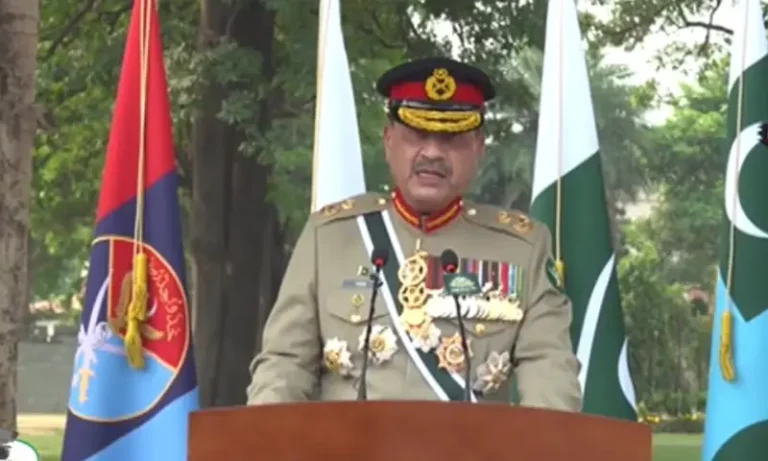
In this context, the leadership of General Asim Munir has become particularly significant, according to defense analysts.
Having demonstrated not only military competence but also strategic foresight on the diplomatic front, successfully navigating one of the most dangerous geopolitical flashpoints in recent history is no ordinary accomplishment, they say.
Many analysts believe that his leadership represents a rare convergence of military strength and diplomatic acumen—qualities that Pakistan has often lacked in tandem.
However, even a leader of such caliber cannot transform the country without addressing its structural deficiencies, economists warn.
Two Fundamental Shifts Needed
For Pakistan to truly benefit from its international achievements, two fundamental shifts are necessary, according to policy experts.
First, Pakistan must reform its governance model. The current system, widely criticized for serving elite interests, must evolve into one that delivers tangible benefits to the common citizen, economists say.
Economic disparity, weak public services, and lack of accountability have eroded public trust over time. A state that cannot provide basic services—healthcare, education, justice—cannot sustain its international stature, analysts warn.
Diplomatic success must be matched by domestic delivery, requiring institutional reform, transparency, and a commitment to meritocracy over patronage, they add.
Second, Pakistan must assert its own identity. For too long, the country has oscillated between influences—Arab, Turkish, and Western—without fully embracing its own historical and cultural uniqueness, cultural observers say.
While these connections are valuable, they should not come at the expense of Pakistan’s own identity, they argue.
Pakistan is not merely an extension of any other Muslim culture; it is a civilization shaped by South Asian history, Islamic heritage and its own socio-political evolution, historians note.
Scholar’s Perspective
Professor Shehryar, a noted scholar of international relations, told Prospera that nations which lead are not those that imitate, but those that define themselves with clarity and confidence.
“Pakistan’s greatest untapped strength lies in its ability to present a unique model of a modern Muslim state—rooted in its own culture, yet globally relevant,” he said.
The Muslim world today suffers from a leadership vacuum, not because of a lack of resources or population, but due to a lack of coherent identity and vision, he argued.
Professor Shehryar further noted that Pakistan has the potential to fill this vacuum, but only if it stops positioning itself as a follower.
“Leadership in the Muslim world will not come from aligning with one bloc or another, but from creating a model that others wish to emulate,” he explained. “This requires internal strength—economic, political and cultural.”
Path to Leadership
The path to leadership in the Muslim world does not lie in rhetoric but in example, analysts say.
If Pakistan can build a governance system that ensures justice, economic opportunity and social welfare, it will naturally attract admiration and alignment, they argue.
Similarly, if it can project a confident cultural identity—one that celebrates its diversity while remaining firmly rooted in Islamic values—it will stand out as a beacon for other nations, cultural experts say.
The idea that “the rest of the Muslim world will gravitate towards Pakistan” is not unrealistic, but it is conditional, analysts say. It depends on Pakistan’s ability to transform itself internally.
Diplomatic achievements, like the mediation between the United States and Iran, provide a platform—but they are not the destination, experts say.