
From Wrenches to Wedding Makeup: How One Pakistani Institute is Training a Million Hands
By Staff Correspondent | ISLAMABAD
ISLAMABAD – In a cramped workshop on the outskirts of Multan, 32-year-old Rashid Ahmed no longer just fixes flat tires. He now runs a diagnostic system for 50 motorbikes a week. Ten kilometers away, Sadia Bibi, a 24-year-old mother of two, transforms brides with contour kits she never knew existed two years ago.
They have never met. But both credit the same quiet giant for their transformation: the Institute of Rural Management (IRM).
While Pakistan debates foreign aid and government subsidies, IRM—a Section-42 company and part of the Rural Support Programme (RSP)—has quietly trained over 1.5 million people across more than 100 districts since 1993. And if you ask the mechanics and makeup artists of Punjab, they will tell you: IRM does not just teach skills. It teaches dignity.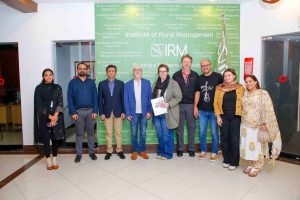
The Mechanic Who Learned to Count Customers
Rashid Ahmed dropped out of school in 8th grade. For 12 years, he worked on the floor of a dingy workshop in Vehari, earning barely PKR 15,000 a month. He knew engines. But he did not know profit.
Then, in 2023, a local community organizer referred him to an IRM-TECH vocational training program.
“I thought it would be a waste of time. I already knew how to change a clutch plate,” Rashid told this correspondent, wiping grease off his hands with a rag. “But IRM taught me the other half of the business.”
That “other half” included:
- Basic inventory management
- Customer service and billing
How to access micro-loans for spare parts
Today, Rashid owns “Rashid Auto Works” with two employees. His monthly income has tripled to PKR 50,000.
“The trainer from IRM sat with me for three months,” he recalls. “Not in a classroom. In my shop. He showed me how even a spark plug has a margin. I never knew that.”
IRM confirms that Rashid graduated from their Entrepreneurship and Value Chain Development track, part of a larger poverty graduation initiative funded by the Southern Punjab Poverty Alleviation Project.
The Makeup Artist Who Bridged Two Worlds
Sadia Bibi’s story is different but no less striking. Married at 19 and confined to her in-laws’ home in Rawalpindi, she was not allowed to work outside. But she was allowed to learn.
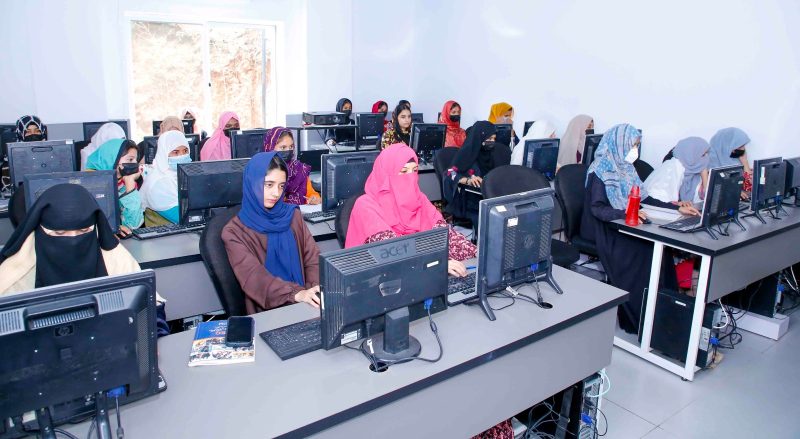
Through an IRM partner organization, she enrolled in a six-month Professional Development Programme focused on Gender Equality, Diversity & Social Inclusion (GEDSI) —combined with hands-on training as a makeup artist under IRM’s technical track.
“My husband laughed when I asked for makeup brushes,” Sadia says, sitting in her small but neatly organized home studio. “But the IRM trainer was a woman. She came to my door. She talked to my mother-in-law. She explained that this was not ‘glamour’—this was a business.”
Today, Sadia charges PKR 5,000 per bridal makeup session. She has done 18 weddings in the last six months. More importantly, she has trained two other young women from her neighborhood.
“IRM did not just give me a certificate,” she says. “They gave me a system. They taught me how to save money, how to open a bank account, and how to report if someone harassed me. No one had ever told me those things before.”
IRM’s Gender and Equality team confirms that Sadia is one of over 200,000 women trained through their GEDSI framework in the last five years.
Not an NGO, But the Engine Behind NGOs
Here is the twist: IRM is not a charity.
It builds the capacity of people—and the NGOs that serve them.
Registered under Section 42 of the Companies Act 2017 and ISO 9001-2015 certified, IRM operates as a learning facility for the non-profit sector. It runs:
IRM Smart Schools (primary education)
IRM-TECH (vocational training for mechanics, electricians, and beauticians)
Climate Action & Biodiversity programs
Monitoring, Evaluation, Accountability & Learning (MEAL) for NGOs
An AI & Digital Incubation Hub (ADIH)
“We are not an NGO. We are an institute that makes NGOs and communities work better,” a senior IRM trainer explained, speaking on condition of anonymity because he was not authorized to comment to the press. “When a mechanic like Rashid succeeds, a whole supply chain stabilizes. When a woman like Sadia earns, her children stay in school.”
The Numbers Behind the Stories
- 1.5 million individuals trained since 1993
- 25,000–30,000 trainees annually
- 500+ different training programs each year
- 100+ districts covered across Pakistan
- ISO 9001-2015 certified
Current projects include the Govt of Punjab supported Southern Punjab Poverty Alleviation Project, PPAF funded Enterprise Acceleration Project (EAP), Govt of Punjab funded Punjab Human Capital Investment Project (PHCIP), and the Govt of Punjab funded Public Schools Reorganization Program (PSRP), IRM Smart STEP, TVO supported Climate Smart Agriculture Incubation Centers, IRM Smart Schools in partnership with PepsiCo, Century Paper Mills, and World Care Foundation.
A Model Worth Watching
As Pakistan faces a youth bulge and a shrinking formal economy, the IRM model—training first, certifying second, and following up with mentorship—offers a rare ray of pragmatism.
Back in his workshop, Rashid Ahmed is now teaching a 19-year-old apprentice.
“One day,” he says, tightening a bolt, “he will open his own shop. And maybe IRM will train him too.”
Across town, Sadia Bibi is already planning her next step: a small salon with two chairs.
“I used to think poverty was fate,” she says, adjusting her dupatta. “Now I think it is just a lack of training.”
Learn more about IRM