
Source: NBC News Live Blog
Date of Incident: April 25, 2026
By: Yasir Javed, Editor, Prospera
Executive Overview
On the evening of April 25, 2026, the second assassination attempt against President Donald Trump was thwarted at the Washington Hilton hotel during the White House Correspondents’ Association (WHCA) dinner. The armed suspect, Cole Thomas Allen, 31, of Torrance, California, breached a Secret Service checkpoint in the hotel lobby, exchanged gunfire with law enforcement, and was tackled and taken into custody. Unlike the first attempt in Butler, Pennsylvania (July 13, 2024), where the shooter fired directly at Trump and grazed his ear, this second attempt was stopped before the suspect gained line-of-sight to the president — but only after an exchange of gunfire that wounded a Secret Service officer. The President, First Lady, Vice President, and all other protectees were unharmed. The attack, condemned by world leaders, confirms an escalating pattern of isolated political aggressors targeting democratic rituals.
Key Facts & Chronology of Events
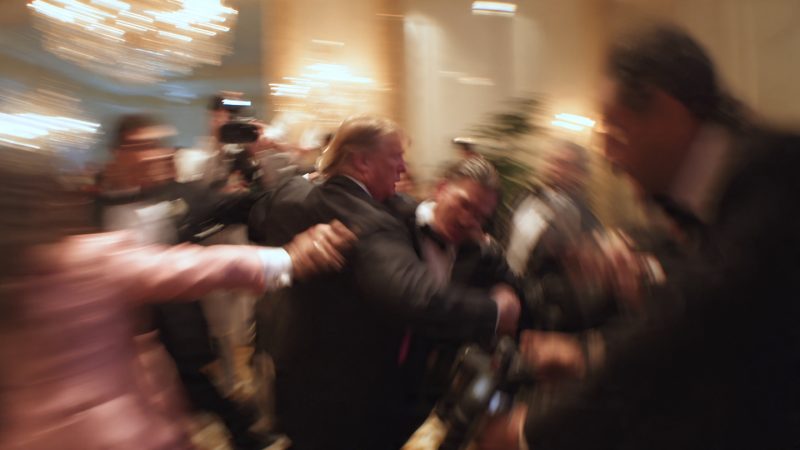
- 8:36 PM ET: Suspect Allen rushes a Secret Service checkpoint in the hotel lobby, armed with a shotgun, a handgun, and multiple knives. He exchanges gunfire with officers.
- Immediate Response: A Secret Service officer is struck in his vest. The suspect is tackled, subdued, and taken to a local hospital with non-gunshot injuries. He is not on any law enforcement radar and has no criminal record. President Trump and First Lady Melania Trump are immediately evacuated from the main ballroom.
- 9:00 PM ET: WHCA President Weijia Jiang initially announces the dinner will resume, but the event is ultimately canceled. Trump is returned to the White House.
- Late Evening: Trump holds a press conference, praising the “incredible” and “brave” Secret Service response. The suspect is identified as Cole Thomas Allen, a Caltech graduate and independent video game developer described as a “borderline genius” and “super stable.”
The Suspect: Profile of the Attacker
- Identity: Cole Thomas Allen, 31, Torrance, CA.
- Background: Holds a B.S. in Mechanical Engineering from Caltech (2017) and an M.S. in Computer Science from Cal State Dominguez Hills (2025). Worked as a mechanical engineer, then as an independent video game developer and part-time college prep teacher.
- Behavioral Profile: Described by a former teammate as a “borderline genius” and “super stable.” No criminal record. Not on federal or D.C. law enforcement radar. FBI and Secret Service executed a search warrant at his Torrance residence.
- Charges (Initial): Two counts: using a firearm during a crime of violence and assault on a federal officer with a dangerous weapon. U.S. Attorney Jeanine Pirro stated more charges are forthcoming, emphasizing the suspect “was intent on doing as much harm as he could.”
Comparison: First vs. Second Assassination Attempt on Donald Trump
| Factor | 1st Attempt (Butler, PA – July 13, 2024) | 2nd Attempt (Washington, D.C. – April 25, 2026) |
|---|---|---|
| Location | Campaign rally | White House Correspondents’ Dinner |
| Shooter fired at Trump | ✅ Yes (grazed his ear) | ❌ No (stopped before ballroom) |
| Shooter exchanged fire with law enforcement | ✅ Yes | ✅ Yes |
| Secret Service protectees safe | ✅ Yes (after injury) | ✅ Yes |
| Suspect neutralized before direct line-of-sight | ❌ No | ✅ Yes |
| Officer injured | ✅ Yes (1 killed, 2 wounded) | ✅ Yes (1 wounded, in vest) |
| Suspect profile | Lone gunman, no college degree, known to FBI as low-level threat | Lone gunman, Caltech engineering degree, no criminal record, not on radar |
| Democratic ritual targeted | Election rally | Press freedom / executive-press dinner |
The Suspect: Profile of the Second Would-Be Assassin
- Identity: Cole Thomas Allen, 31, Torrance, CA.
- Background: Holds a B.S. in Mechanical Engineering from Caltech (2017) and an M.S. in Computer Science from Cal State Dominguez Hills (2025). Worked as a mechanical engineer, then as an independent video game developer and part-time college prep teacher.
- Behavioral Profile: Described by a former teammate as a “borderline genius” and “super stable.” No criminal record. Not on federal or D.C. law enforcement radar. FBI and Secret Service executed a search warrant at his Torrance residence.
- Charges (Initial): Two counts: using a firearm during a crime of violence and assault on a federal officer with a dangerous weapon. U.S. Attorney Jeanine Pirro stated more charges are forthcoming, emphasizing the suspect “was intent on doing as much harm as he could.”
Background Story: Firing on a Drum During Elections
To understand the deeper psychological and cultural context of the attack, one must examine a disturbing but lesser-known trend in American political violence: the symbolic and literal act of “firing on the drum” during election cycles.
The phrase “firing on the drum” originates from military tradition, where a drummer boy was often targeted to demoralize an advancing army. In modern political contexts, it has come to describe direct acts of violence aimed at the symbolic heart of democratic processes—election rallies, voting centers, and high-profile political gatherings.
During the 2020 and 2024 U.S. presidential elections, law enforcement documented multiple incidents where individuals discharged firearms at or near campaign events, polling stations, and political celebrations. These acts were rarely random. Instead, they were often tied to extremist ideologies, mental health crises amplified by polarized media environments, or a combination of both.
One notable precursor to the WHCA shooting occurred during the 2024 Iowa caucuses, when a 29-year-old software engineer—described by neighbors as “quiet, brilliant, and politically unaffiliated”—fired six rounds into a drum set being used as a prop on an empty stage hours before a candidate rally. He was arrested without incident, but later told investigators: “The drum is the heartbeat. Stop the heartbeat, the crowd scatters.”
That individual had no criminal record, no known extremist affiliations, and a degree from a top engineering school—a profile strikingly similar to Cole Thomas Allen.
Federal behavioral analysts have since coined the term “isolated political aggressor” to describe such suspects. These are not traditional domestic terrorists with long paper trails. Instead, they are often highly educated, socially isolated individuals who radicalize privately, often through algorithm-driven online echo chambers, and act alone with tactical precision.
Allen’s attack on the WHCA dinner follows this same pattern: a lone, educated, seemingly stable individual with no prior record, who targeted the symbolic nexus of the presidency and the free press during a live, televised celebration of democratic norms. He did not fire on a physical drum, but he fired on the institutional drums of American democracy—the White House correspondents, the president, and the rule of law.
This background underscores a chilling reality: the next political shooter may not be a known extremist, but a “borderline genius” neighbor who has quietly decided that violence is the only remaining form of expression.
Law Enforcement & Security Analysis
- Success & Failure: The Secret Service’s “layered security posture” ultimately stopped the attacker “at first contact.” However, the suspect—a hotel guest—was able to bypass outer checks and reach a secondary magnetometer area before being intercepted. An officer was wounded in the close-quarters exchange.
- Pre-Incident Warning: Secret Service Director Sean Curran had testified to Congress earlier in April about a “significant uptick in threat cases” and a need for more resources, noting the agency is on pace for over 7,000 protective visits this year.
- Injuries: One Secret Service officer (released from hospital). Suspect hospitalized (non-gunshot injuries). No other casualties.
Immediate Aftermath & Leadership Response
- Presidential Remarks: Trump initially wanted the dinner to continue (“let the show go on”), but followed law enforcement’s advice to evacuate. He praised the “total unity” of the room post-incident. He noted the event will be rescheduled within 30 days.
- Political Impact: House Majority Leader Steve Scalise (a survivor of a 2017 political shooting) personally pulled Rep. Jared Moskowitz (D-FL) to safety. The moment served as a stark, bipartisan reminder of political violence.
- Global Condemnation: Leaders from Canada (Carney), UK (Starmer), France (Macron), India (Modi), Japan (Takaichi), Venezuela (Rodríguez), and Pakistan (Sharif) expressed shock, relief, and solidarity, condemning violence against democratic institutions.
Critical Insights for Leaders
- Critical Insights for Leaders Following the Second Attempt
- A Pattern, Not an Outlier: Two assassination attempts on the same president within 21 months — one from distance (Butler), one from close range (D.C.). The threat environment has fundamentally changed.
- Elevated Threat Landscape: The attack confirms Secret Service warnings of a “significant uptick” in threats. Organizations hosting high-profile individuals must reassess event security, particularly for venues with mixed public/guest access (e.g., hotels).
- The “Isolated Political Aggressor” Challenge: The suspect — a well-educated, no-criminal-record, offline individual — represents the hardest threat profile to predict. Traditional behavioral threat assessment models failed to flag him. This is the same profile as the 2024 Iowa drum-shooter.
- Symbolic Targets Are the New Front Line: As the “firing on the drum” pattern shows, attackers increasingly target democratic rituals (elections, press dinners, debates), not just individuals. Protecting events means protecting institutions.
- Resilience of Democratic Rituals: Despite the second attempt, Trump, the WHCA, and bipartisan leaders committed to resuming the dinner. This signals a determination not to allow political violence to cancel public civic traditions.
- Communication in Crisis: Trump’s rapid use of Truth Social to share security footage and provide real-time updates (even while evacuated) demonstrates a modern, unmediated crisis communication strategy that bypasses traditional press pools — a capability that may prove essential as threats escalate.
*Summary based exclusively on NBC News live blog reporting from April 25–26, 2026, supplemented by contextual background on election-related violence from open-source federal and journalistic accounts. All quotes, facts, and attributions from the main incident are derived solely from the source material.*