
BEIJING – As the shadow war between Israel and Iran threatens to boil over into a broader regional conflagration, the world’s diplomatic focus has shifted unexpectedly toward Beijing. This week, Iranian Foreign Minister Abbas Araghchi arrived in the Chinese capital seeking a “strategic shield” against Western sanctions and Israeli military pressure. Simultaneously, the diplomatic circuit is buzzing with preparations for President-elect Donald Trump’s upcoming engagements with Chinese leadership. As the United States and Israel intensify their stance against Tehran, China is quietly consolidating its position as the indispensable power broker, reaping significant economic and geopolitical gains from a conflict it has managed to remain largely distanced from.
The Diplomatic Pivot to the Middle Kingdom
The arrival of Abbas Araghchi in Beijing marks a critical juncture for the Islamic Republic. Facing a “maximum pressure” campaign likely to be revitalized by the incoming Trump administration and persistent military strikes from Israel, Tehran is looking to its most powerful patron for more than just rhetoric. Araghchi’s mission is twofold: to ensure the continuity of the 25-year Strategic Cooperation Agreement signed in 2021 and to gauge Beijing’s willingness to act as a backchannel to the United States.
China’s role is not merely as a passive observer. In March 2023, Beijing stunned the global diplomatic community by brokering a rapprochement between Saudi Arabia and Iran. This established a precedent for China as a mediator capable of achieving what Washington could not. Now, as Israel targets Iranian infrastructure and the U.S. bolsters its carrier strike groups in the region, Tehran sees Beijing as the only capital with enough leverage over both Washington and the regional powers to prevent a total collapse of the Iranian state.
The “Surprise Gains”: Energy, Yuan, and Leverage
While the West views the Iran conflict through the lens of security and non-proliferation, China views it through the lens of strategic opportunity. Analysts point to three “surprise gains” Beijing has secured:
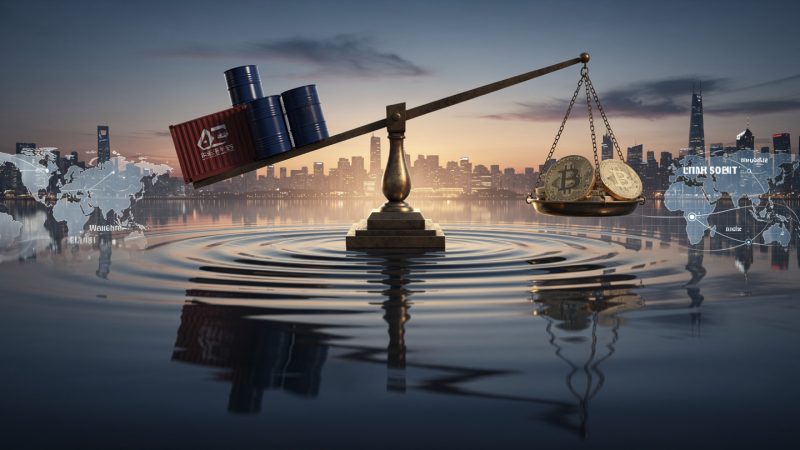
- Energy Dominance and Discounted Crude: Despite international sanctions, China remains the primary buyer of Iranian oil. According to data from commodities trackers like Vortexa and Kpler, China imports upwards of 1.2 to 1.5 million barrels per day from Iran, often referred to as “Teapot” refinery trade. These transactions are frequently conducted in Chinese Yuan, bypassing the SWIFT banking system and the U.S. dollar. This provides China with a steady stream of energy at prices significantly below market rates while simultaneously advancing the internationalization of the Yuan.
- Geopolitical De-dollarization: The “war on Iran” – characterized by financial isolation – has inadvertently accelerated the creation of an alternative financial architecture. By forcing Iran to trade outside the dollar zone, the U.S. has provided China with a live testing ground for its Cross-Border Interbank Payment System (CIPS).
- Diplomatic Leverage Over Washington: As President-elect Trump prepares for his upcoming China visit, the “Iran card” has become a potent piece of leverage for President Xi Jinping. Beijing understands that Washington needs China to curb Iran’s nuclear ambitions and restrain its regional proxies. By maintaining a line to Tehran, China ensures that the U.S. must come to Beijing to discuss Middle Eastern stability, potentially trading cooperation on Iran for concessions on trade or Taiwan.
Official Perspectives
Beijing’s official stance remains one of calculated neutrality and a call for “restraint.” During recent high-level meetings, Chinese Foreign Minister Wang Yi stated, “China will continue to promote a political settlement of the Iranian nuclear issue and supports Iran in safeguarding its legitimate rights and interests.” This rhetoric serves to position China as the “adult in the room,” contrasting its approach with what it describes as “Western interventionism.”
From the Iranian perspective, the reliance on China is a matter of survival. Foreign Minister Araghchi recently emphasized that “China is a strategic partner and a reliable friend,” noting that the expansion of the BRICS bloc – which both nations now belong to – provides a new framework for resisting “unilateralist” sanctions.
A Balanced Perspective: The Risks for Beijing
However, China’s gains are not without risk. A full-scale war between Israel and Iran would be catastrophic for China’s Belt and Road Initiative (BRI) projects in the region. Beijing’s primary interest is stability; it requires the free flow of oil through the Strait of Hormuz, not just from Iran, but from its larger trading partners in the GCC, such as Saudi Arabia and the UAE.
Furthermore, if China appears too close to Tehran, it risks alienating its growing economic ties with Israel, particularly in the technology and infrastructure sectors. Beijing must walk a razor-thin tightrope: supporting Iran enough to keep it as a viable energy partner and a thorn in Washington’s side, but not so much that it triggers a regional explosion that destroys China’s broader economic interests.
The Trump Factor
The upcoming meeting between Chinese leadership and Donald Trump adds a layer of unpredictability. During his first term, Trump’s “maximum pressure” campaign relied on secondary sanctions that targeted Chinese companies trading with Iran. If Trump returns to this playbook, Beijing may face a choice: sacrifice its Iranian energy lifelines to protect its broader trade relationship with the U.S., or double down on its support for Tehran to signal defiance against American hegemony.
Conclusion: The New Architect of the Middle East
The “war on Iran” – whether fought through sanctions, cyberattacks, or kinetic strikes – has fundamentally altered the regional power dynamic, with China as the primary beneficiary. By providing Iran with an economic vent and a diplomatic platform, Beijing has prevented the total success of Western isolation strategies.
As Foreign Minister Araghchi concludes his stay in Beijing and the world awaits the next move from the White House, one thing is clear: the road to peace, or the management of conflict in the Middle East, now runs through Beijing. China has turned a regional crisis into a showcase for its growing influence, proving that in the modern era, the most significant gains are often made by those who can master the art of the middle ground.