
ISLAMABAD (ONLINE DESK) – In a high-stakes geopolitical gambit, Pakistan has officially operationalised six overland trade corridors to Iran, creating a critical economic lifeline for Tehran as it remains strangled by a US naval blockade in the Strait of Hormuz.
The move, finalized by Pakistan’s Ministry of Commerce on April 25, comes as Islamabad simultaneously attempts to mediate ceasefire talks between Washington and Tehran. While officials frame the decision as a necessary economic emergency measure, analysts are questioning whether Pakistan is actively undermining the US “maximum pressure” campaign—and if this will derail the fragile peace process.
‘A Legal Hole’ in the Blockade
The United States imposed a stringent naval blockade on Iranian ports starting April 13, aiming to cut off Tehran’s oil exports and essential imports . The blockade has led to the stranding of over 3,000 containers destined for Iran at Pakistani ports, particularly Karachi and Port Qasim .
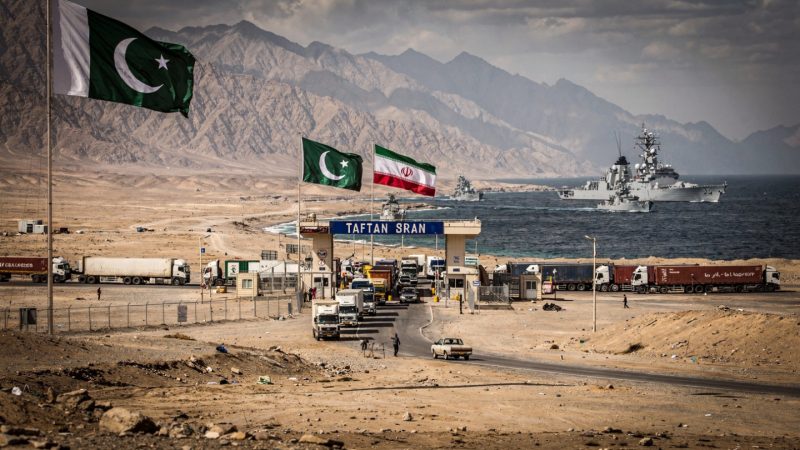
To bypass the maritime siege, Pakistan invoked a bilateral road transport agreement signed with Iran in 2008. The newly designated routes connect major Pakistani ports (Gwadar, Karachi, Port Qasim) to the Iranian border crossings at Gabd and Taftan via the southwestern province of Balochistan .
Economically, the corridors are a massive reprieve for both nations. Pakistan is utilizing the routes to offload a massive backlog of cargo, while Iran gains access to critical goods without needing to run the US Navy’s gauntlet in the Gulf.
Undermining the US Campaign?
The central question emerging from Western capitals is whether this land bridge constitutes a direct betrayal of the United States, which is currently Islamabad’s necessary partner at the negotiating table.
Sources indicate that Washington was not consulted before the statutory regulatory order was issued . The development has been labeled a strategic “double game.” Retired US military analysts have pointed out that by using sovereign overland territory, Pakistan has effectively drilled a legal loophole in the naval blockade that President Donald Trump ordered .
“Pakistan just punched a legal hole in the United States naval blockade of Iran while simultaneously mediating the ceasefire that depends on the same blockade for leverage,” observed a strategic analyst quoted by The Economic Times .
However, Pakistani diplomats suggest that the long-term threat to US strategy might be limited. Bureaucratic delays and the sheer complexity of moving thousands of containers from ship to truck across Balochistan mean the goods are “still sitting there” nearly a week after the order was signed . Furthermore, Pakistan remains vulnerable to US secondary sanctions if the banking transactions for these goods violate Treasury Department rules.
Impact on the Islamabad-Mediated Talks
The timing of the announcement is precarious. The second round of US-Iran peace talks, which were supposed to take place in Islamabad, has already stalled. Iran has refused direct negotiations while the blockade remains in place
While Pakistan’s Army Chief, General Asim Munir, continues to shuttle between the two sides, the opening of the trade routes provides Tehran with significant breathing room. Analysts at a recent panel discussion in Lahore noted that the blockade has pushed Iran’s oil storage to a saturation point, creating immense internal pressure. By providing an overland outlet, Pakistan may reduce Iran’s urgency to capitulate to US demands at the bargaining table .
“It is difficult to read this as coincidental,” a Pakistani diplomat told The National. By activating the land bridge, Islamabad has changed the power dynamics of the negotiation: Pakistan is no longer just a mediator but a direct economic stakeholder in Iran’s survival .
The Chabahar-Gwadar Rivalry
The move also carries massive implications for regional geopolitics, particularly regarding India. The US blockade has effectively neutralized Iran’s Chabahar port—a project New Delhi has invested in heavily to bypass Pakistan. With Chabahar inaccessible, Iran has turned to Pakistan’s Gwadar port, a China-backed project, to handle the diverted trade .
This shift threatens to leave India on the sidelines of the postwar trade architecture, reinforcing the China-Pakistan economic corridor as the dominant supply route into Central Asia and the Gulf region.
As Pakistan balances its role as a US mediator and a Chinese ally, the opening of these six routes signals that Islamabad is prioritizing its own economic survival and regional connectivity over strict adherence to US foreign policy objectives. Whether Washington views this as a betrayal or a necessary evil to keep the peace process alive remains the key variable in the coming weeks.