

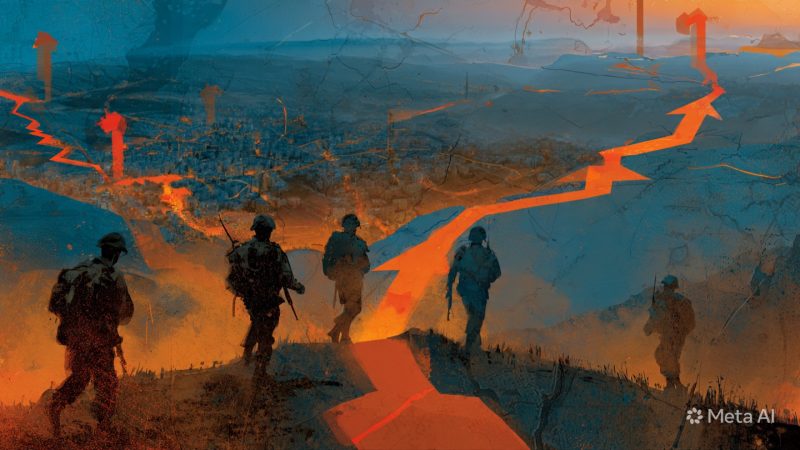
Israeli Forces Reach Nabatieh: A Turning Point in Lebanon’s War
Prospera – Geopolitical Risk Desk
Published: May 30, 2026
For the first time since the 2006 war, Israeli soldiers have crossed the Litani River in southern Lebanon and reached the outskirts of Nabatieh—one of the region’s largest and most symbolic cities. The advance marks a major escalation in Israel’s ongoing invasion and poses a direct challenge to Hezbollah’s defensive lines.
Senior Lebanese military sources confirmed to Anadolu news agency on Saturday that Israeli forces are now positioned beyond the Litani, a waterway Israel has declared the perimeter of its unofficial buffer zone. Al Jazeera’s Obaida Hitto, reporting from the southern city of Tyre, described the situation as “a final push to encircle Nabatieh, breaking through the second and third lines of defence of Hezbollah and isolating the western Bekaa Valley from the south.”
A City of Resistance Under Threat
Nabatieh is not merely a strategic objective. It is a cultural and economic hub for southern Lebanon and a historic symbol of resistance against Israeli incursions. The city’s Shia-majority population has long stood on the front line of cross-border conflict. If it falls, analysts say, it would represent a significant psychological and territorial blow to Hezbollah—and a stark signal that Israel’s ground campaign is expanding well beyond limited buffer-zone objectives.
Lebanon’s military reported that two of its soldiers were seriously wounded near Nabatieh after being targeted by an Israeli drone. Later on Saturday, Lebanon’s National News Agency (NNA) said an Israeli drone attack on the village of Jebchit killed at least one paramedic and wounded four others, also damaging the Lebanese Relief Hospital.
Hezbollah Strikes Back
In response, Hezbollah claimed a series of attacks on northern Israel. The group said it fired rockets at the town of Kiryat Shmona, ambushed Israeli soldiers near Ghandouriyeh (forcing them to withdraw), destroyed an Israeli military vehicle near Yohmor al-Shaqif using Ababil attack drones, and struck the Yaara barracks and an army command headquarters in Naqoura. A missile barrage also targeted Israeli military infrastructure in Nahariyya.
The exchanges suggest that while Israel is advancing, Hezbollah retains significant offensive capabilities.
Displacement and Diplomacy in Tatters
The Israeli army’s Arabic spokesperson, Avichay Adraee, issued evacuation orders for at least 10 villages in southern Lebanon, warning residents they could be killed if they remain. Al Jazeera’s Hitto noted that more than 20 percent of Lebanon’s population—approximately 1.2 million people—have already been displaced. “Some of these families have been continuously displaced since 2023,” he said, with many now living in vehicles or makeshift camps in public parks.
The military escalation comes despite ongoing peace talks. Just one day before the advance, officials from Israel and Lebanon met in Washington for US-facilitated negotiations aimed at ending the war that began in early March, following Hezbollah’s attacks after the assassination of Iran’s Supreme Leader, Ali Khamenei.
Lebanon’s Prime Minister, Nawaf Salam, denounced Israel’s actions as a “dangerous and unprecedented” escalation. In a televised address, he insisted that a “scorched-earth policy would not ensure Israel’s security” and defended his government’s decision to negotiate directly with Israel as the “least costly path” for Lebanon.
President Joseph Aoun spoke by phone with US Secretary of State Marco Rubio, stressing the importance of Israel respecting the existing nominal ceasefire—an agreement that has been repeatedly violated by Israeli forces since mid-April.
Prospera’s Assessment: Markets and Risk
For global investors and regional stability monitors, the push to Nabatieh signals a breakdown of the ceasefire’s core assumptions. Key implications include:
- Energy markets: Any Israeli move to cut the Bekaa Valley from the south raises the risk of a sustained ground war, potentially drawing in Iran and threatening Gulf oil flows. Oil prices are likely to open higher on Sunday.
- Humanitarian and reconstruction costs: With 1.2 million displaced and a major city under siege, Lebanon’s economic collapse will accelerate. The Lebanese pound, already trading at record lows, faces renewed pressure.
- Hezbollah’s response threshold: If Nabatieh falls, Hezbollah may escalate beyond rocket attacks, potentially using precision-guided missiles against Israeli population centers—a red line that could trigger a full-scale regional war.
Bottom line: The crossing of the Litani and the encirclement of Nabatieh represent a qualitative escalation. Diplomacy has not failed yet, but the window for a US-brokered halt is closing rapidly. Prospera advises clients to review contingency plans for a wider conflict in the eastern Mediterranean.
Israeli Forces Reach Nabatieh: A Turning Point in Lebanon’s War
This article is based on reporting from Al Jazeera published May 30, 2026, and additional Prospera analysis.