
As war blocks Iran’s ports, South Asia pays more for fuel – but still eats
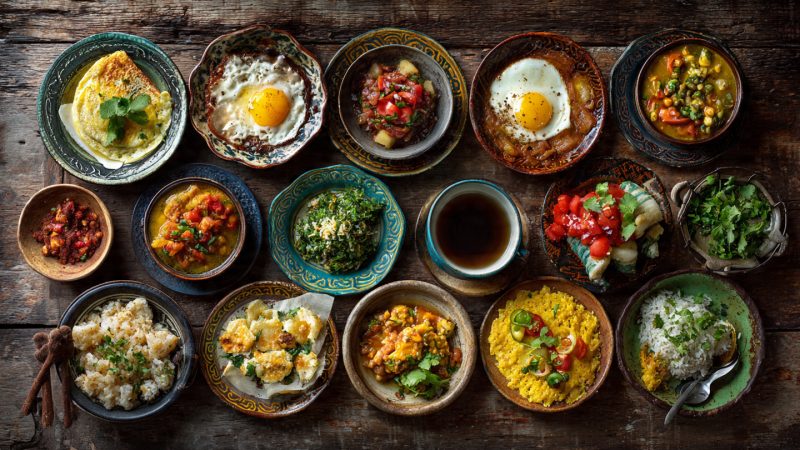
By Rashid Mahmood – ISLAMABAD / DELHI / DHAKA / KABUL – In downtown Tehran, a single fried egg now costs one million Iranian rials.
At the free-market rate of 1.8 million rials per US dollar on April 29, that is $0.55.
In Vijayawada, India, the same egg costs ₹6 – just $0.07.
In Dhaka, Bangladesh, a dozen eggs sell for Tk 115 to 125, or roughly Tk 10 per egg – $0.09.
In Kabul, Afghanistan, a dozen eggs cost 101 Afghanis – about 8.4 AFN per egg – $0.10.
In Lahore, Pakistan, a dozen farm eggs at Rs 300 works out to Rs 25 per egg – $0.09.
One breakfast ingredient. Six countries. One price that screams war economy. The others? Inflation, yes. But not collapse.
As the US-Iran war enters its ninth week, with a naval blockade strangling Iran’s ports and the rial crashing past 1.8 million against the dollar, South Asia offers a stunning contrast.
Pakistan, India, Bangladesh, and Afghanistan – all struggling with inflation, all dependent on imported fuel – have not descended into Iran’s chaos.
Here is why.
🥚 The Egg Index: What a Dozen Costs Around the Region
| Country | Local Price (per dozen) | USD Equivalent (per dozen) | Per Egg (USD) |
|---|---|---|---|
| Iran (Tehran) | ~12,000,000 rials (extrapolated) | $6.66 | $0.55 |
| Pakistan (Lahore) | Rs 240 – 350 | 0.86–0.86–1.25 | 0.07–0.07–0.10 |
| India (Vijayawada) | ₹72 – 84 | 0.86–0.86–1.00 | 0.07–0.07–0.08 |
| Bangladesh (Dhaka) | Tk 115 – 125 | 1.01–1.01–1.10 | 0.08–0.08–0.09 |
| Afghanistan (Kabul) | 101 AFN | $1.20 | $0.10 |
*Conversion rates used (April 30, 2026): 1 USD = 1,800,000 IRR • 280 PKR • 84 INR • 114 BDT • 84 AFN (estimates; actual market rates vary).*
The contrast is brutal.
An Iranian minimum-wage worker receives around 200 million rials per month – just $111.
A single egg in Iran costs 0.5% of their daily wage.
An Indian minimum-wage worker earns around ₹15,000 per month – $179.
An egg in India costs 0.04% of their daily wage.
⛽ Petrol Prices: Where You Pay vs. Where You Wait
Petrol tells an even starker story.
On paper, Iran has the cheapest fuel in the region – heavily subsidized at around 15,000 rials per litre.
That is roughly $0.008 per litre – less than one cent.
But cheap means nothing when there is no fuel.
A naval blockade imposed on April 13 has, according to Iranian security officials, left the country with perhaps six to eight weeks of reserves.
Two weeks have already passed.
Here is what South Asia pays – and gets:
| Country | Local Price (per litre) | USD Equivalent | Availability |
|---|---|---|---|
| Iran | ~15,000 rials | $0.008 (less than 1 cent) | ❌ Severe shortages, 12+ hour queues or empty pumps |
| Pakistan | Rs 393.35 | $1.40 | ✅ Available (expensive, but there) |
| India (Delhi) | ₹94.77 | $1.13 | ✅ Available |
| India (Mumbai) | ₹103.54 | $1.23 | ✅ Available |
| India (Chennai) | ₹100.84 | $1.20 | ✅ Available |
| India (Kolkata) | ₹105.41 | $1.25 | ✅ Available |
| Bangladesh | Tk 135 | $1.18 | ✅ Available |
| Afghanistan | 68 AFN | $0.81 | ⚠️ Rising, but available |
🇮🇳 India: Stable Prices Despite $120+ Crude
Despite global crude oil prices surging past $120 per barrel amid escalating West Asia tensions, petrol and diesel rates across India remained unchanged on April 30, 2026.
In the national capital Delhi, petrol sells at ₹94.77 per litre (1.13),whiledieselispricedat₹87.67(1.04).
Mumbai, which typically has the highest fuel rates due to local taxes, sees petrol at ₹103.54 per litre (1.23)anddieselat₹90.03(1.07).
The government has actively debunked viral social media rumors claiming a ₹10 hike in petrol and a ₹12.50 hike in diesel.
The Press Information Bureau’s fact-check unit clarified that no such order has been issued by the Ministry of Petroleum and Natural Gas.
Brent crude, the international benchmark, was trading at $123.28 per barrel on April 13, according to the U.S. Energy Information Administration.
It has remained volatile amid ceasefire negotiations that have reached a standstill.
Crucially, the Ministry of Petroleum stated that India is “the only country where petrol and diesel prices haven’t increased in the last 4 years.”
Oil marketing companies have absorbed much of the international volatility to insulate citizens.
For now, pumps are open, prices are stable, and there are no queues.
But with crude above $120, analysts warn the cushion may not last forever.
🇧🇩 Bangladesh: A 16% Hike in One Day
Bangladesh raised fuel prices sharply on April 19, citing the Iran war’s pressure on global crude.
Petrol jumped from Tk 116 to Tk 135 per litre – a 16 percent hike.
That is $1.18 in US dollars.
Diesel now costs Tk 115 (1.01),whilekeroseneispricedatTk130(1.14).
Energy Minister Iqbal Hasan Mahmud told parliament that the government is providing Tk 16,045 crore in subsidies just for diesel and octane over three months.
That is roughly $1.4 billion.
For consumers, the pain is real.
But fuel still flows, pumps are open, and there are no wartime queues.
🇵🇰 Pakistan: The Region’s Highest Pump Prices
Pakistan pays the region’s highest pump price.
Petrol now costs Rs 393.35 per litre – $1.40.
High-speed diesel is priced at Rs 380.19 per litre – $1.36.
Kerosene oil has reached Rs 467.48 per litre – $1.67.
Light-speed diesel is comparatively cheaper at Rs 159.76 per litre – $0.57.
Liquefied petroleum gas (LPG) now sells for Rs 304.12 per kilogram – $1.09.
These are painful numbers for a country where the minimum wage hovers between Rs 36,000 and Rs 45,000 per month (129to161).
Yet availability remains stable.
No queues. No blockades. Just expensive fuel.
🇦🇫 Afghanistan: The Landlocked Squeeze
Afghanistan sits in a precarious middle.
Petrol has risen from 55 AFN to 68 AFN per litre – about $0.81.
Diesel costs around 65 AFN per litre ($0.77).
LPG is priced at approximately 45 AFN per kilogram ($0.54).
Taxi drivers in Kabul report struggling to afford fuel.
The Taliban government faces frozen central bank assets, a shattered banking system, and a continuing humanitarian crisis.
But unlike Iran, Afghanistan’s land routes through Pakistan and Central Asia still receive imports.
Fuel is expensive. But it arrives.
🇮🇷 Iran: Cheapest on Paper. Deadliest in Reality.
A litre of subsidized petrol in Iran costs 15,000 rials.
That is less than one US cent – $0.008.
The cheapest in the world.
But with refineries hit by airstrikes and maritime routes blocked, what good is a price at an empty pump?
Drivers in Tehran report waiting in queues for 12 hours or more, only to find empty stations.
The government has not officially acknowledged the full scale of the fuel shortage.
But the naval blockade – imposed on April 13 – has cut off most refined imports.
And domestic refining capacity has been severely degraded by repeated strikes.
📉 Why Iran Collapsed and South Asia Didn’t
The difference is not governance.
Every South Asian country has deep economic problems.
| Country | Monthly Minimum Wage (Local) | Monthly Minimum Wage (USD) |
|---|---|---|
| Iran | 200,000,000 rials | $111 |
| Pakistan | Rs 36,000 – 45,000 | 129–129–161 |
| India | ₹15,000 – 20,000 | 179–179–238 |
| Bangladesh | Tk 12,500 | $110 |
| Afghanistan | ~10,000 AFN | $119 |
But none of these countries are at war.
Not one faces a naval blockade.
Not one has lost control of its ports.
Not one has seen its currency lose 90 percent of its value in a single month.
Iran’s crisis is not inflation.
It is survival collapse – a slow suffocation where the economy cannot breathe because the air (fuel, imports, trade) has been cut off.
As Ettela’at, one of Iran’s oldest newspapers, warned on April 29:
“The outlook of the war is entirely uncertain, and officials must focus on people’s livelihoods.”
📋 The Complete Table: What Everything Costs (Local + USD)
| Item | Iran (USD) | Pakistan (USD) | India (USD) | Bangladesh (USD) | Afghanistan (USD) |
|---|---|---|---|---|---|
| Petrol (1 litre) | $0.008 (unavailable) | $1.40 | 1.13–1.25 | $1.18 | $0.81 |
| Diesel (1 litre) | $0.006 | $1.36 | 1.04–1.14 | $1.01 | $0.77 |
| Kerosene (1 litre) | $0.005 | $1.67 | ~$1.10 | $1.14 | ~$0.70 |
| LPG (1 kg) | ~$0.11 | $1.09 | ~0.95–1.19 | ~1.05–1.23 | ~$0.54 |
| Eggs (1 dozen) | $6.66 | 0.86–1.25 | 0.86–1.00 | 1.01–1.10 | $1.20 |
| Minimum wage (monthly) | $111 | 129–161 | 179–238 | $110 | ~$119 |
🎙️ “What Is Going On, Mr. Pezeshkian?”
The contrast has driven Iran’s state media into rare public criticism.
State TV anchor Elmira Sharifi stared into the camera this week and demanded:
“What is going on in this country, Mr. Pezeshkian?”
Her report detailed how many Iranians can no longer afford rice, sugar, oil, fruit, dairy, or medicine.
These basics remain available, if expensive, in every South Asian capital.
President Masoud Pezeshkian inherited a sinking economy in 2024.
War has drowned it.
The government’s latest solution asks selected supermarkets to sell goods on credit to subsidy recipients, with repayments deducted from future handouts.
The monthly subsidy?
Less than $7 per person – roughly 12.6 million rials.
That buys:
- 12 eggs in Tehran
- 50 eggs in India
- 60 eggs in Pakistan
- 65 eggs in Bangladesh
- 58 eggs in Afghanistan
🔮 The Bottom Line
One region. Two realities.
Iran – Cheapest petrol on paper at 0.008perlitre,butnonetobuy.Eggsat6.66 per dozen. Minimum wage at $111 per month. A single egg consumes 0.5 percent of a worker’s daily wage.
South Asia – Expensive fuel at 0.81to1.40 per litre, but available. Eggs at 0.86to1.20 per dozen. Minimum wages from 110to238 per month. A dozen eggs costs between 1 and 3 percent of a monthly minimum wage – not 60 percent.
As one Tehran resident told Iran International this week:
“We used to joke that inflation would make eggs cost a million rials. Now we don’t joke. We just don’t eat eggs.”
For now, India, Pakistan, Bangladesh, and Afghanistan worry about price.
Iran worries about survival.
And until the war ends, that gap will only grow.
*Exchange rate note: All USD conversions are approximate, based on free-market or interbank rates as of April 30, 2026. Actual consumer prices may vary by city, shop, and time of purchase.*